
The Lead
THE LEAD: The Honey Badger Market - Why Today’s Stocks Fear Nothing
By Bill Taylor · Oct 13, 2025 Views: 56
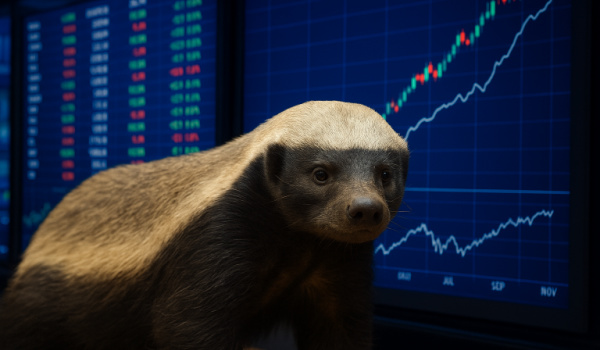
For decades, investors have framed market moods in the language of animals. When stocks tumble and pessimism reigns, it’s called a bear market. When optimism surges and prices charge ahead, it’s a bull market. But lately, the U.S. stock market seems to obey neither creature. It shrugs off war headlines, inflation scares, and policy uncertainty. It simply keeps moving forward, often in defiance of logic.
Welcome to the Honey Badger Market — a market that, like its namesake, is fearless, relentless, and seemingly immune to danger.
The Classic Market Archetypes
To understand this new animal in the investing zoo, it helps to recall the old ones.
A bear market occurs when major stock indexes — such as the S&P 500 or Nasdaq — fall at least 20% from a recent peak, often reflecting widespread pessimism and economic contraction. Bears are slow, cautious, and defensive. Investors sell off risk, retreat to cash, and brace for further pain. Classic examples include the bursting of the dot-com bubble in 2000 and the global financial crisis of 2008.
A bull market, by contrast, charges ahead with confidence. Prices rise steadily, corporate profits expand, and investors embrace optimism. Bull markets tend to last longer than bears, feeding on momentum and faith in economic growth. The long post-2009 run through early 2020 remains one of the strongest bull markets in history.
Yet neither definition quite fits the market we’ve witnessed over the past few years — one that looks beyond fear itself.
Enter the Honey Badger
The honey badger, native to Africa and parts of Asia, is one of nature’s most audacious survivors. Barely three feet long, it has been filmed taking on lions, raiding beehives, and devouring venomous snakes — and surviving the poison. National Geographic once dubbed it “the world’s most fearless animal.” It digs, fights, and eats with abandon. Even when wounded or bitten, it gets back up and keeps going.
Sound familiar?
The modern U.S. stock market has become the honey badger of finance — too stubborn, too self-confident, and too resilient to care about bad news. It absorbs venom and turns it into fuel.
Fearless in the Face of Headlines
Consider the news flow of the last several years.
-
War in Ukraine and conflict in the Middle East. Geopolitical tension usually sends investors fleeing to safety. Yet major indexes climbed through most of 2022–2024, pausing only briefly before resuming their upward trend.
-
Inflation shocks and Federal Reserve rate hikes. Conventional wisdom says higher interest rates crush stock valuations. But after a volatile 2022, equities rallied through 2023 and 2024 as investors decided inflation was “under control enough.”
-
Bank failures and debt-ceiling drama. When Silicon Valley Bank collapsed in March 2023, many predicted contagion. Instead, the S&P 500 was higher three months later. Even Washington’s recurring budget standoffs barely dented sentiment.
-
Earnings slowdowns and tech layoffs. In past cycles, such signals triggered sell-offs. Today, they’re often met with indifference — or even viewed as bullish “efficiency gains.”
In short, bad news keeps coming — and the market keeps climbing.
A Market That Eats Bad News for Breakfast
In a bear market, headlines dominate behavior. Investors react emotionally to every threat. In a honey badger market, the news becomes lunch. The venom is neutralized.
For instance, when inflation data surprised to the upside in early 2024, stocks dipped for a few days — then rallied to fresh highs. When interest-rate expectations shifted, yields rose, but equity indexes barely blinked. When tech antitrust cases made headlines, investors doubled down on AI and semiconductor plays instead of retreating.
Even during tragic global events or political turmoil, the same pattern repeats: short-term shock, quick digestion, renewed buying.
This isn’t blind optimism — it’s behavioral evolution. The market seems to have learned that waiting out fear often pays better than reacting to it. Like the honey badger, it has developed thick skin.
What’s Driving This Fearlessness?
Several factors explain why today’s market seems so unflappable:
-
Liquidity Still Rules. Despite rate hikes, global liquidity remains abundant. Fiscal spending, corporate cash reserves, and investor capital searching for yield keep markets afloat.
-
Technology Dominance. Mega-cap tech firms — Apple, Microsoft, Nvidia, Amazon, Alphabet — now represent such a large portion of market capitalization that their steady profits and innovation pipelines create a stabilizing gravity.
-
AI Euphoria. Artificial intelligence has become the new growth narrative. Investors see it as a multi-decade theme capable of reshaping productivity, earnings, and entire industries. Optimism around AI often outweighs fear elsewhere.
-
Investor Conditioning. After years of central-bank rescues, traders have been trained to “buy the dip.” That reflex still dominates, even when risks appear large.
-
Global Diversification of Optimism. Capital is flowing not just into U.S. equities but into India, Japan, and other resilient economies. The global market mindset is broader — and bolder — than in previous cycles.
The Psychology of the Honey Badger
Fearlessness can be both strength and weakness. The honey badger’s boldness keeps it alive but also puts it in constant danger. Similarly, a market that refuses to fear may overlook genuine threats.
Historically, complacency precedes correction. The dot-com bubble, the housing boom, and even the crypto mania all shared one trait: belief that “this time is different.”
But the honey badger metaphor suggests something subtler. This market isn’t irrational — it’s resiliently rational. It recognizes risk but refuses to be ruled by it. Investors have shifted from reactive to adaptive. They no longer flee at every snake in the grass. They observe, assess, and often conclude that the bite won’t be fatal.
Lessons for Investors
The honey badger market teaches several lessons worth remembering:
-
Don’t underestimate resilience. Even when the economy wobbles, the market can recover faster than expected. Betting against that resilience has been costly.
-
Stay humble about timing. Fearless markets can remain irrational longer than fearful investors can stay solvent. Shorting momentum in a honey badger phase is dangerous.
-
Diversify beyond emotion. The best defense in fearless times is balance — holding assets that perform whether the badger keeps running or finally rests.
-
Respect behavioral change. Market psychology evolves. Investors raised on crisis headlines may need to recalibrate expectations for volatility, reactions, and recovery times.
The Final Word
A bear market recoils.
A bull market charges.
But a honey badger market? It simply doesn’t care.
Like its animal counterpart, today’s stock market has learned to thrive on adversity. It ignores the venom of pessimism and keeps moving forward. It devours inflation fears, geopolitical shocks, and recession whispers — digesting them all into steady gains.
Whether this indifference proves wise or reckless will depend on time and circumstance. But for now, the honey badger market lives up to its legend: fearless, adaptable, and astonishingly hard to kill.
So when the next headline screams disaster, remember the lesson of the honey badger — and the market that channels its spirit. Fear less. Observe more. Because this market, it seems, just doesn’t care.
 Bill Taylor is the CEO and Chief Market Strategist at Digital Wealth News, offering expert insights on markets and asset classes. A proud Horned Frog and Texas Christian University grad, he played college basketball while there. With a strong finance background and passion for digital innovation, Bill shares thought leadership on market trends and portfolio strategy for our audience.
This article was developed with research assistance from ChatGPT