
What the Policy Debate Is Missing
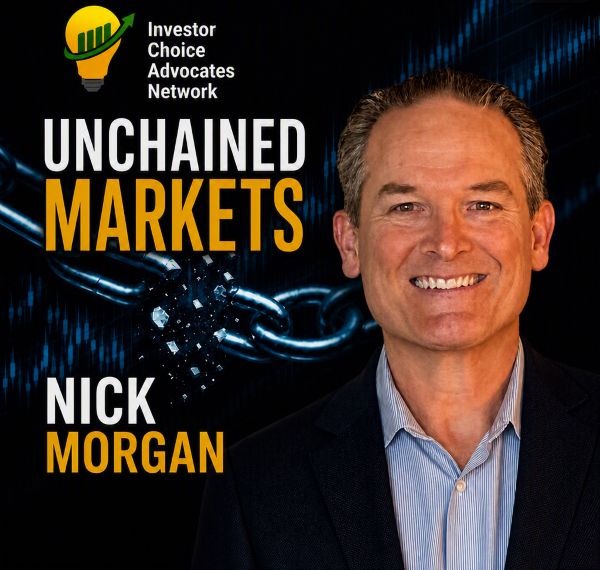
By Nick MorganFounder and President, ICAN Law
If you’ve followed SEC reform for any length of time, you already know the accredited investor rule. You can probably recite the thresholds — $1 million in net worth, $200,000 in income. You’ve read the explainers, sat through the policy debates, and heard the standard arguments for keeping it and for changing it. You may have an opinion already.
Most of those conversations have one thing in common. They treat the rule as a Wall Street rule. The discussion about its impact often gets framed around retail investors missing out on access to unicorn companies.
While widening choices for investors is certainly important, there’s an enormous impact that isn’t being discussed. All across the country, it’s limiting and hurting healthcare services and innovation. Small medical practices that can’t stay afloat or open to begin with; clinical trials that never secure funding; rural clinics that close and aren’t rebuilt; and mental health platforms trying to expand access — all of them limited by funding options because most of the people who could meaningfully fund them aren’t allowed to.
The reform conversation has mostly missed those places, and we want to tell this side of the story with the help of our clients: Emily Kapszukiewicz and Laurence Girard of Healthcare Shares, P.B.C. ICAN filed a lawsuit last year on their behalf challenging the rule on constitutional grounds. But today, let’s talk about what the rule actually does once it leaves the page — and it’s an outcome we think most will agree isn’t desirable.
What the Policy Debate Keeps Leaving Out
When the accredited investor rule comes up in policy circles, the debate tends to stay close to the issues it was designed to address, like risk, suitability, and sophistication. Defenders argue the thresholds protect ordinary people from investments they don’t understand. Critics argue the thresholds are a poor proxy for sophistication. Both sides have a point.
But here’s the problem: when applied in the real world, it looks much different than protecting investors. Instead, it blocks people from putting their money behind causes they believe in. It narrows the kinds of companies that can find funding at all —not every worthwhile business is built around maximizing returns. And it leaves the experts who know an industry best with no way to put real skin in the game in the work they care most about.
A family medicine doctor in Mississippi making $190,000 a year wants to put $20,000 into a colleague’s new practice. The rule says no. A clinical psychologist with 20 years of experience working with patients and $500,000 in savings wants to invest in a virtual mental health platform she’d actually refer to. The rule says no. Nurses want to invest in a clinic they work for to keep it from closing. The rule says no.
When we asked Emily how her own friends and family reacted to the case, what surprised her wasn’t the outrage. It was how many people assumed the rule was on their side:
“A lot of people really interpreted the law to be helping them. Well, doesn’t that protect people? Didn’t this come out of consumer protection? And they’re right—the original intent of a law can be good, but the application can be very flawed. A lot of people, my family and my friends, they haven’t been able to invest because of this law, and it hasn’t been explained. I think that’s the troubling thing, is that people take it for granted because they trust the government. They want to believe that these laws are there to protect society, when in fact the misinformation and the lack of communication and the lack of clarity about what the risks are has actually done a lot of harm, because people don’t understand.” —Emily Kapszukiewicz
Meet Laurence and Healthcare Shares
The doctors and nurses above aren’t hypothetical. They’re the people Laurence Girard talks to every week.
Laurence runs Healthcare Shares, a public benefit corporation built around a simple idea: American healthcare gets better when the people closest to patients have a real seat at the ownership table. Physicians. Nurse practitioners. Psychologists. Administrators. Leaders. The people who spend their careers in a specialty are usually the ones best positioned to tell which companies in that specialty are actually worth backing. When those efforts pay off, they deserve a share of the upside.
Healthcare Shares is designed around that thesis. The model isn’t charity. It’s an attempt to align expertise, capital, and returns in a way the current system mostly doesn’t. Plenty of start-ups want this kind of structure. Plenty of clinicians want in on it. Laurence’s job is to bring the two together.
His obstacle isn’t a shortage of qualified people. It’s that the rule keeps leaving them out of the room. And the irony is that the people being left out are almost never falling short by a lot. A few thousand dollars under an income line. A net worth tipping just below the threshold. In many cases, they’re earning just shy of qualifying because they chose the less lucrative parts of medicine — rural primary care, community mental health, public health work. The rule reads those choices as disqualifying. Laurence reads them as exactly the qualifications he’s looking for.
The result is a fund — and a model — that struggles to grow not because the demand isn’t there, but because the supply of “allowed” investors is artificially small.
Ask Laurence why it matters who is funding healthcare, and he goes straight to what a clinician brings to the table that a spreadsheet can’t:
“The idea is that if you could have more physician ownership in healthcare, or just individual healthcare executives that want to do the right thing, you’d have really a better healthcare system. And so often I come across these physicians that make $198,000 a year, but they’re told that they can’t invest because they don’t make $200,000 a year. If you could have more physicians involved in venture capital and just being owners, they generally make better decisions, because most physicians went to medical school to help people. And they can also be great advisors to entrepreneurs as they’re building companies. Somebody that worked in investment banking, they have a financial knowledge, but they haven’t necessarily worked with patients like a physician has, where they can actually say: ‘Well, the reason I think this is a good investment is because this is something I would refer my patients to, or I would use in clinical practice.’ It’s just a different experience that physicians have in assessing healthcare products.” —Laurence Girard
Meet Emily Kapszukiewicz
If Laurence’s story shows what the rule does to the people building things, Emily’s shows how arbitrarily it draws the line in the first place and how much it misunderstands about why people actually invest.
Emily Kapszukiewicz holds an advanced degree, has years of senior leadership experience, and is passionate about improving healthcare. When she tried to put her own money into the Healthcare Shares fund, her net worth came up a few thousand dollars short of the rule’s threshold.
A short time later, she signed on as CEO of Owl Therapy, a virtual mental health clinic in Healthcare Shares’ venture studio. Under a separate clause of the accredited investor rule, officers of a company automatically qualify as accredited investors in that company, regardless of their income or net worth. The day her signature dried, the answer flipped to yes. She was now allowed to invest in Owl Therapy directly: an early-stage startup, considerably riskier than the diversified fund she’d been blocked from the week before.
Her expertise hadn’t changed. Her finances hadn’t changed. The science hadn’t changed. A piece of paper changed, and with it the SEC’s verdict on whether she could be trusted to make her own decision.
Emily’s own description of that moment is the best summary of the rule we’ve heard:
“I was qualified to be the CEO, but not qualified to make a decision about whether to invest in my own company, until I signed on the dotted line, and then all of a sudden got the magic fairy dust, and I became real smart overnight. Because I wasn’t before. And sign on the dotted line, and then magically it’s all good.” —Emily Kapszukiewicz
The arbitrariness is one half of the story. The other half is what Emily was actually trying to do.
She wasn’t approaching this investment the way Wall Street imagines investors approach things. She wasn’t optimizing for the highest possible return. She wanted to put her money behind work she understood, in a field she’d dedicated her career to, with the possibility of a return if things went well and a clear-eyed willingness to accept the downside if they didn’t. That’s how a lot of mission-driven investors actually think.
What’s strange is the line the rule draws around that motivation. If Emily had wanted to donate the same amount of money to a healthcare nonprofit doing the same kind of work, the SEC would have had nothing to say about it. You can give money to a cause with zero expectation of return and no one in Washington asks any questions. The moment that same money carries any expectation of return, however modest, it becomes a security—and the same person who could give freely is suddenly someone the federal government insists on protecting from herself.
A lot of Americans are willing to put real money behind causes they believe in. The rule pushes most of them toward the one option that guarantees they’ll get nothing back.
What the Rest of Us Miss
It would be easy to read all of this as a problem for Emily, Laurence, and the doctors and nurses they describe. It isn’t. The cost lands on everyone.
When the people closest to a field can’t fund the work in that field, the money doing the funding comes from somewhere else. Often that somewhere else is well-intentioned and capable. There’s nothing inherently wrong with capital that prioritizes returns. Plenty of important medical advances have been funded that way and will be again.
But it’s one perspective, not the only one. A healthcare system funded almost entirely by people whose primary lens is financial returns will, over time, look like a healthcare system funded almost entirely by people whose primary lens is financial returns. The investments that pencil out get made. The ones that don’t, often don’t — even when “doesn’t pencil out” really means “doesn’t pencil out yet,” or “the math doesn’t work for the next quarterly report,” or “doesn’t quite work out in this market but matters enormously in a smaller one.”
Practices open where the math works, not always where they’re needed most. Research dollars cluster around conditions with large addressable markets and skip the ones that don’t. Treatment models scale based on what’s most efficient at volume, not always on what’s best for the patient in the chair.
It isn’t that returns-focused capital is bad. It’s that returns-focused capital, by itself, can’t see everything that matters and shouldn’t be the only option. The people who could see the rest of it — the clinicians, the patients, the experts who’d put their own money behind the work they know — are the people the rule keeps out.
And the founders on the other side of that wall pay for it in the most immediate way there is. Laurence has watched it happen:
“Sometimes I’ve had four conversations with someone they think is accredited, they’ve answered 100 due diligence questions, they’re like, okay, great, I’m counting on this $50k to come in for my payroll, and then all of a sudden they can’t accept the person’s money because of this rule, and now they can’t meet payroll, and now the entrepreneur is in a more dangerous position. I’ve even seen entrepreneurs where, because they couldn’t accept money from a healthcare executive or a doctor, now they have to go borrow money from essentially loan sharks, merchant cash advance lenders that they’re personally guaranteeing. Now they’re taking money from people that are basically bad actors, instead of somebody that’s really not a bad actor—they just make $1,000 less than what the SEC requires.” —Laurence Girard
The Real Stakes
ICAN took this case because the rule is unconstitutional, and we intend to prove it. But we also took it because returns-focused capital isn’t the only kind of capital, and maximizing returns isn’t the only reason people invest. ICAN’s name says it out loud—we advocate for investor choice. That means more paths for the people who want to put their money behind something they believe in, more room for the experts who want skin in the game, and more options for the founders trying to build something the existing system isn’t funding.
The accredited investor rule, as it works today, narrows all of that. We’re fighting to open it back up. More choices for investors. More choices for all of us.
Learn more about ICAN at https://www.icanlaw.org/
Author Bio: Nick Morgan is President of the Investor Choice Advocates Network (ICAN), a nonprofit public interest litigation organization advocating for economic liberty, capital formation, and entrepreneurship rights on behalf of small investors and entrepreneurs facing SEC and FINRA overreach.