
Family Office Focus
Family Offices: Speeding Up Philanthropic Impact
By DWN-team · Sep 7, 2026 Views: 106
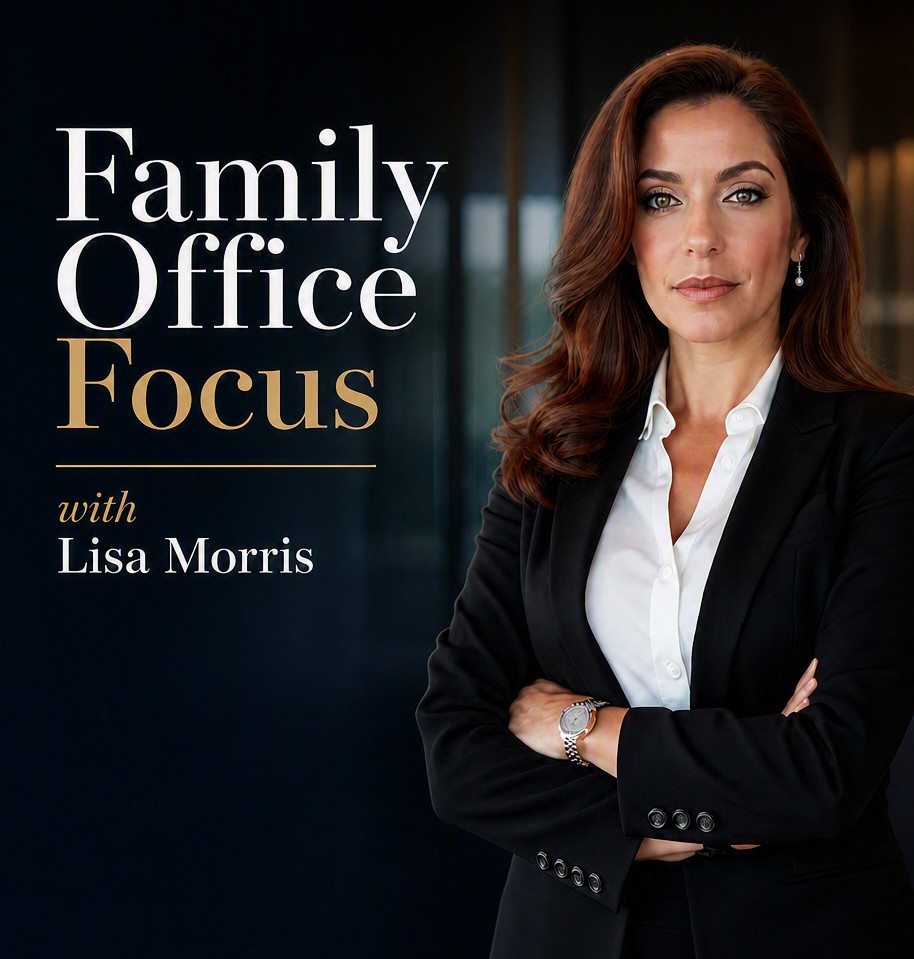
By Lisa Morris
Family offices have a unique opportunity to act as the "Superman" of philanthropy when it comes to speed in providing help across the world. There are many superheroes in philanthropy—those who are out there every day working tirelessly to carry out on-the-ground work—but family offices can support their fellow superheroes by funding emergency responses at a speed rarely possible for traditional institutions and grantmaking organizations.
In philanthropy, speed is often the critical difference between timely crisis intervention and tragedy. Family offices function as the catalysts and emergency responders of the social sector precisely because they are not constrained by traditional institutional grantmaking processes.
Unbound by rigid grantmaking cycles, multi-layered bureaucratic committees, or narrow program mandates, family offices deploy emergency relief and seed-stage philanthropic capital in days rather than months. By providing fast, unrestricted capital and taking calculated risks on early-stage innovations or rapid disaster response, they fill a critical funding gap that traditional institutional foundations simply cannot address.
When a humanitarian crisis hits or a breakthrough social innovation emerges, traditional foundations are often stuck waiting for the next quarterly board meeting or formal grant approval process. Family offices operate on a radically different timeline. Combining entrepreneurial instinct with immediate liquidity, they can evaluate a need, bypass the Request for Proposal (RFP) red tape, and deploy capital straight to the front lines while institutional grant makers are still drafting their meeting agendas. In philanthropy, this structural agility isn't just about administrative efficiency—it is what allows catalytic capital to transform and save lives in real time.
Beyond capital mobility, the true force multiplier of a family office lies in its network. Family offices do not operate in a vacuum; they belong to trusted, close-knit communities where relationships are built on discretion, shared values, and mutual trust.
I just witnessed this extraordinary power of peer relationships during the horrific, ongoing catastrophe in Nepal.
On August 26, 2026, a massive glacial collapse and avalanche near the Nepal–China border unleashed a violent torrent of rock, ice, and mountain debris into local river systems. The surge triggered a seismic force equivalent to a 5.2-magnitude earthquake, driving rapid flash floods and mudslides down steep Himalayan valleys and devastating communities along a 40-mile corridor.
Combined reports from Nepalese and Chinese authorities indicate that over 1,300 people have died and more than 5,000 remain missing. Entire mountain villages were submerged or wiped out, road networks were severed, and major health facilities and hydroelectric stations were swept away. Hundreds of thousands of survivors are in urgent need of immediate medical assistance, clean water, and basic medical supplies. Local clinics and regional hospitals that survived the wave are overwhelmed and desperately short on essential supplies.
In moments like these, speed isn't a luxury; it is a life-saving necessity.
I am a member of a group of family offices and business leaders called FOINET, a committee of members of IPI/Campden wealth who share a passion for philanthropy. One of the members introduced the group to the AFYA Foundation an incredible nonprofit based in New York that distributes medical supplies globally to the places that need it most.
After his introduction to the group, members jumped in and were able to get over 300k masks and PPE supplies to Uganda to combat the Ebola crisis, and now with the tragedy in Nepal, within days they have raised half of the $300,000 needed to get a shipment of supplies to Nepal. By the time this article is published, hopefully we will have raised enough for the entire shipment just in our little group, but more is needed, so please do check out the AFYA Foundation for ways to help.
Additionally, AFYA has been connected to the National Executive Service Corps ( www.NESC.org ) for help in developing its Strategic Plan and Board of Directors to reach even more sustainable levels. The NESC and its eleven national affiliates have over 400 wealthy C-Suite consultants who provide their expertise to nonprofits on a pro bono basis.
This is just one small example of the magic that happens when family offices work together on philanthropic missions. Because our member principals and executives already hold deep trust in one another, we can mobilize collective resources, share real-time intelligence on the ground, and aggregate capital without the friction or posturing common in broader institutional syndicates.
The catastrophic events in Nepal remind us that our global climate and humanitarian landscape are increasingly volatile. When natural disasters strike, the world cannot afford to wait for slow-moving institutional bureaucracy.
Family offices hold a unique position in global wealth stewardship—one defined not just by financial capital, but by autonomy, decisiveness, and human empathy. By embracing our role as the "Supermen" of philanthropy and rallying our networks like FOINET to back frontline execution teams with fast, flexible funding, we can redefine what modern disaster response looks like. In doing so, we don't just protect wealth across generations; we deploy it to save lives when every hour counts.
What can your family office do? Join with other families and combine the power of your financial and relational resources. As Margaret Mead famously said, "Never doubt that a small group of thoughtful, committed citizens can change the world; indeed, it's the only thing that ever has."
Disclosure: This article is for informational purposes only and does not constitute tax or legal advice. Anyone considering investments should work with an experienced tax professional before relying on any of the provisions described above.Author Bio: Lisa Morris is Managing Director of AKS Family Partners LP, a single family office based in NYC. She has two decades of experience spanning theater, travel, entrepreneurship, philanthropy, and investments.
She founded the travel company Road Concierge, which was later acquired by Internova Travel Group. A former Broadway actress, she is also an Entrepreneur-in-Residence with NYSERDA, an EarthShot Prize nominator, and a member of several investment and impact communities, including NEXUS Impact Society, 3i, IPI/Campden, Top Tier Impact, Aura Club, Adoreum, and Gaingels.
She has held senior consulting roles with nonprofits including Epic Foundation, Mary Tyler Moore Foundation, and AKS Family Foundation, and as Director of Philanthropic Services for FORCE Family Office. She serves on several advisory boards, consults for companies from startups to public firms, and is a frequent public speaker and pitch coach. Her upcoming book, "Can You Rollerskate?", launches November 2nd, 2026 and is available for pre-order on Amazon, Waterstones, and Barnes & Noble.