
Natural Capital & The Energy Transition
Five Thousand Alerts, Forty Fixes
By DWN-team · Sep 28, 2026 Views: 108
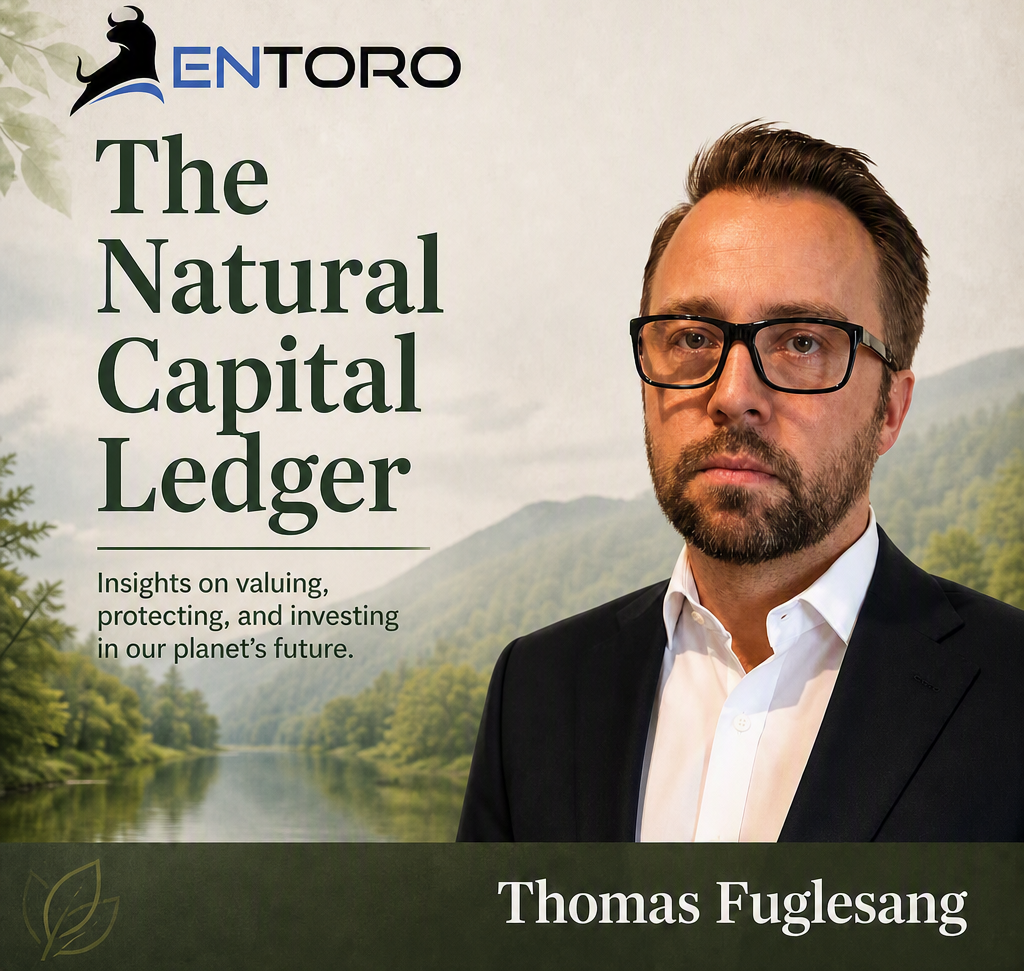
By Thomas Fugelsang, Managing Director, Entoro Capital, LLC
This article is the first in a series of three on methane finance.
The world can see major methane leaks now. Since its launch, the United Nations Environment Program’s Methane Alert and Response System has issued more than 5,000 satellite alerts across 33 countries, passing information on major emission events to governments and operators. As of April 2026, UNEP had documented just over 40 cases where those alerts led to verified mitigation.
Detection is no longer the only constraint. The gap is often read as a failure of will, but the economics point to a broader problem. A leak can be visible, technically fixable and economically rational to address while still lacking a clear mechanism to fund the work before the savings or environmental value arrive.
The cheapest tonne on the board
The International Energy Agency's Global Methane Tracker 2026 estimates that roughly 70 percent of methane emissions from fossil fuels, nearly 85 million tonnes, can be abated with technology that already exists. More than 35 million tonnes could be eliminated at no net cost at 2025 energy prices because the value of recovered gas exceeds the cost of the equipment.
For oil and gas, the IEA estimates that most available methane-abatement measures become cost-effective at a carbon price of roughly $20 per tonne of carbon dioxide equivalent. Direct air capture, by comparison, still operates at costs measured in the hundreds of dollars per tonne.
This is not a technology waiting to be invented. In many cases it is a valve, compressor seal, vapor-recovery unit or leak-detection program waiting to be paid for.
A third of the warming, one percent of the money
Methane is responsible for roughly a third of the warming the planet is experiencing today. Because it remains in the atmosphere for only about a decade, reducing emissions now can slow warming much faster than reductions in long-lived carbon dioxide.
The money has not followed the opportunity. Climate Policy Initiative tracked average methane-abatement finance of about $13.7 billion annually in 2021 and 2022, only about 1 percent of global climate finance and well below its estimated $48 billion annual investment need by 2030.
The mismatch is even more striking in fossil fuels. Despite having some of the largest and cheapest abatement opportunities, the sector received only about $10.6 million of specifically tracked methane-abatement finance in 2021 and 2022.
Capital does not automatically follow the cheapest tonne. It follows projects that can be financed.
Creditable is not the same as financeable
Carbon markets have recognized methane reductions for years. Landfill gas capture, agricultural methane recovery and other destruction projects have long been eligible under major carbon-crediting systems.
The problem is sequencing.
A credit generally becomes valuable after the reduction has occurred, been measured and been verified. The operator may need money before equipment is purchased or a repair is made. The party paying for the equipment may not own the recovered gas. In other cases there may be no economic use for that gas at all.
The IEA points to exactly these barriers: misaligned incentives, difficulty securing upfront investment, limited technical capacity and uncertainty over how captured methane can be put to productive use.
The challenge is therefore not inventing value for methane. It is building a financial instrument capable of carrying that value backward, from a verified future reduction to the capital required to produce it today.
The Bottom Line
Methane does not suffer from the usual problem of an invisible environmental externality. The emissions can increasingly be seen from orbit, the equipment is commercially available, and in many cases the economics already work.
What is missing is the bridge between detection and deployment.
A verified methane reduction can have measurable environmental value, recovered-gas value and, in some markets, compliance or credit value. The financing opportunity is to turn those future cash flows into capital before the repair occurs.
Five thousand alerts show that the world has become good at finding the problem. Forty documented mitigations show how much work remains in financing the solution.
Disclaimer: The views and opinions expressed in this article are those of the author and do not necessarily reflect the views of Entoro, LLC, or any of their respective affiliates. This article is provided for general informational and educational purposes only and does not constitute investment advice, a recommendation, an offer to sell, or a solicitation of an offer to buy any security, financial product, or investment strategy. The information presented is believed to be reliable but is not guaranteed as to its accuracy, completeness, or timeliness. Any forward-looking statements or opinions are subject to change without notice.
Author Bio: Thomas P. Fuglesang is a Managing Director at Entoro Capital, LLC and Capturiant, LLC, with over 25 years of experience in energy, shipping, commodities, and real estate. He specializes in corporate finance, investment banking, private wealth management, and equity sales, with deep expertise in structuring transactions and developing international capital market solutions. At Entoro and Capturiant, he leads structuring, capital markets advisory, and business development for environmental and alternative investment products.Previously, Thomas spent over 17 years as Managing Director at Absalon Capital Ltd, overseeing projects in oil services, shipping, and commodities, while holding multiple senior roles including Board Director and CFO. Earlier in his career, he held roles at Morgan Stanley (Private Wealth Management and Associate in Luxembourg), Credit Suisse (Investment Banking, Transportation/Shipping), and Pareto Securities (Equity Sales).
Thomas has extensive capital markets experience in capital raising, M&A, governance, advisory, and execution of large-scale international transactions. His leadership roles have included Board Director at CAPOL and Ascot Energy Services, CFO of Newport Shipping LLP, and Director at Ohlsson International Ltd and SeaHold Group.
He holds CFA Level I, the Investment Administration Qualification, and Capital Markets & Securities Analyst certification. His academic background includes an MSc in Shipping, Trade & Finance from Bayes Business School (London), and a BA in Business Economics from Vrije Universiteit Brussel (Belgium) and Augsburg University (Minneapolis).
Thomas is recognized for bridging traditional and emerging sectors and structuring innovative solutions for corporate and institutional clients globally.