
Digital Wealth News AI Reality Check is a new series exploring one of the biggest questions facing the wealth management industry today: Where is artificial intelligence delivering real value, and where do expectations exceed reality? In each edition, DWN speaks with an industry leader about practical applications, lofty promises, and unavoidable challenges firms must navigate as they pursue AI.
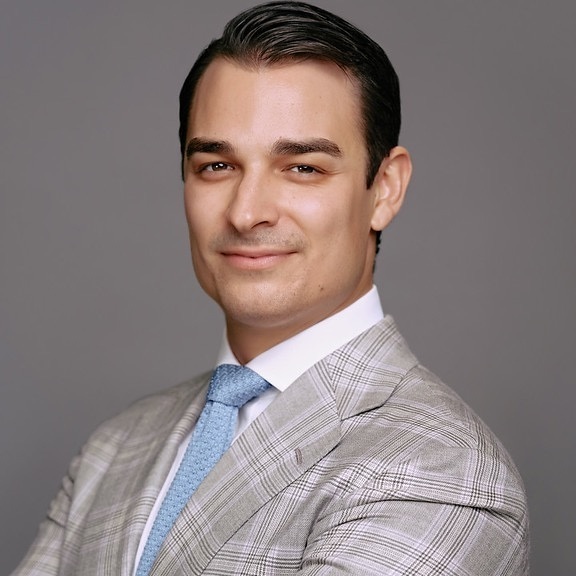
In this edition, we connect with Max DiSesa, Managing Partner at Seven Bridges Wealth Advisors. For DiSesa, the tech’s greatest opportunity isn’t replacing the financial advisor or automating the client relationship. It’s giving advisors more time and capacity to do what clients value most: provide thoughtful advice, identify opportunities and deliver a more personalized experience. He sees promise in AI-powered meeting documentation, document analysis and agentic AI that can take on administrative work behind the scenes.
In this edition of AI Reality Check, DiSesa shares his perspective on where AI is creating meaningful value today, the risks firms need to avoid and why the next phase of AI could transform financial planning.
DWN: What types of AI applications are delivering the most value to the wealth management industry today?
MD: There has never been a better time to be a financial advisor, and enhanced technology is allowing advisors to better scale their practices to take advantage of the industry’s growth opportunities.
As far as AI is concerned, meeting documentation is the clearest win. An advisor who used to spend 20-45 minutes after every client meeting writing a note and follow-up now spends five minutes reviewing a draft. Multiply that across a book of a hundred-plus households and you’ve saved substantial time which hopefully translates into more time with clients.
Document work is the second one. A new prospective client hands you two tax returns, an estate binder and statements from four custodians. Pulling that into a cohesive picture used to take a material amount of time and effort. AI compresses it to a day, and it catches things even the best financial professionals may miss, like a beneficiary designation that contradicts the will.
I’ll also applaud Mariner on how they’ve embraced agentic AI. Their new partnership with Humanity Labs puts the equivalent of 700 full-time AI workers on onboarding, account opening and back-office operations. That’s exactly where this technology belongs right now: on the administrative end, freeing the team to face clients.
Neither of these may sound exciting. And you can go as far as using AI to build a replacement for your own CRM, but all of this buys you time and money. The efficiencies need to flow back to the client in the form of more depth in every review, faster answers and an advisor who listens instead of being buried in prep work. A household with $2 million can now receive the attention once reserved for a $20 million relationship. If the client experience doesn’t improve, the efficiency is wasted.
DWN: What is the most overrated application of AI within the wealth management industry today?
MD: Client-facing chatbots.
If I had a question about my mother’s estate, I would not want to explain it to a bot. I understand the appeal. It looks great on paper to scale with automated services, but clients hire advisors for things a chatbot cannot provide. A chatbot isn’t truly capable of empathy, nor can it take responsibility for the advice it gives.
Close behind: AI-generated newsletters and LinkedIn posts. They create a sea of sameness. When every advisor publishes the same interchangeable commentary, clients notice. It also tells me the firm found the least valuable use of a very capable tool and stopped there.
We use AI every day, but we’ve drawn a clear line. It supports the analysis, the research and the preparation. The relationship and the final judgment stay human. Firms that reverse those roles automate the very thing clients hired them to provide.
DWN: What are the most critical pitfalls wealth management firms must avoid when adopting AI?
MD: The first, hands down, is putting client information into public AI tools without firm-approved controls and enterprise protections. That creates serious privacy and compliance risk, and I fear that it’s happening at firms right now that don’t know it.
The second is letting unreviewed content reach a client. AI can be so confidently incorrect, and in any planning work, one mistake can have material complications for the client. The advisor is still accountable for every word.
The third is publishing AI output verbatim. Everyone can tell. The tells are consistent: the “it’s not X, it’s Y” constructions, everything in threes, pet words like “quietly” and “delve.” If your content has this, your clients have already noticed.
Finally, firms shouldn’t treat every saved hour as a cost-cutting win and call it a day. If AI gives your team fifteen hours back and the client receives nothing deeper, or more personal, you improved your margin, but you completely missed the point. You might lose that client to an advisor who is going deeper. Even if you don’t, you should be able to look in the mirror and answer honestly: am I using all the tools at my disposal for my clients?
DWN: What AI development will have the greatest impact on the wealth management industry in the next 12 to 24 months, and why?
MD: I don’t think AI will replace advisors. The more immediate threat is the advisor across town who spent these two years building better infrastructure. Her clients will receive faster attention, uncover more opportunities, and will get better advice. By 2028, that difference will be clear in the client experience, even if clients never see the technology behind it.
The biggest change will be the move from AI you talk to, to agentic AI that can be delegated work across a firm’s entire ecosystem. Imagine a system that sees a market decline, identifies clients with a Roth conversion opportunity, drafts the analysis and alerts the advisor while the decision is timely, months before it would surface in an annual review.
That moves financial planning from an annual event to a continuous service. A level of monitoring once associated with a family office becomes possible for many more households.
My view is: If you aren’t spending time experimenting with these tools and trying to incorporate them into your advice, you risk being stuck trying to build a faster horse and buggy while your competitor drives off in the automobile.