
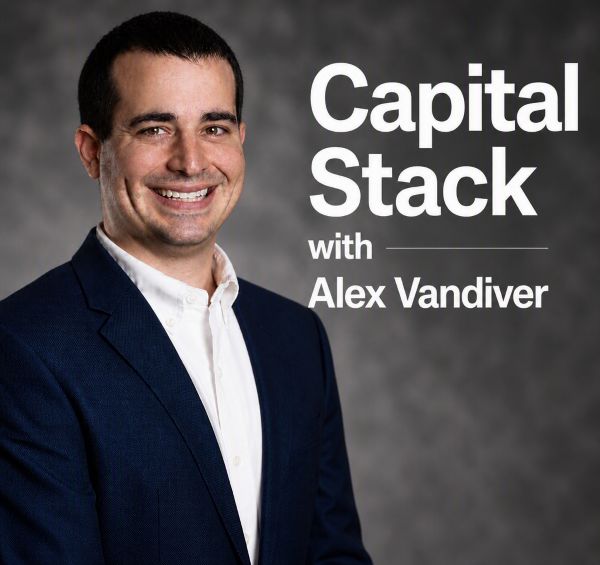
By Alex Vandiver, Associate, Entoro Capital, LLC
Last column I said the scarcest thing in middle-market real estate had become capital. Specifically the bank credit that quietly financed the asset class for forty years and then stepped back. In one corner of the market, that is already the wrong answer. For data centers, capital is not the problem. Power is. The scarcest input in the fastest-growing real estate sector in the country is not land, and it is not money. It is a megawatt you can actually plug into.
Why one building eats as much power as a small city
A normal office or warehouse is a building with a modest electric bill. A data center is basically a power plant wearing a warehouse costume. The reason sits in the racks. A regular server rack pulls somewhere around 5 to 10 kilowatts. A rack full of the chips used to train and run AI can pull 40 to over 100 kilowatts, ten times as much, and the densest AI setups go higher than that.
Two things make it worse. The chips are built to run hard, and AI training keeps thousands of them going full tilt for weeks. Then all that electricity turns into heat, and getting the heat out takes its own serious power, more and more through liquid cooling that barely existed in this industry a few years ago. Put it together and one large AI campus can need several hundred megawatts. The biggest ones being planned are measured in gigawatts, which really does rival what a mid-sized city uses. By most estimates data centers have gone from about four percent of total US electricity toward high-single digits by the end of the decade, and almost all of that growth is AI.
Why investors love them anyway
If the power is the hard part, the investment case is the easy part, and it is a strong one. Three things stand out. The tenants are some of the best credits on earth. The hyperscalers signing these leases are investment-grade tech companies with balance sheets bigger than most countries. The leases are long, usually ten to fifteen years, often with built-in rent bumps, which is exactly the kind of steady, predictable cash flow big institutions are built to own. And the demand is secular, not cyclical. AI adoption, cloud, and data growth are not tied to the rate cycle the way an office tower or a spec apartment deal is.
Now add scarcity on top of that demand and the pricing power is obvious. In the main markets vacancy is basically nothing, and tenants pre-lease before the building is even built. When a tenant with that kind of credit will sign for fifteen years before the concrete is poured, the asset stops looking like real estate and starts looking like infrastructure. That is exactly how the biggest allocators treat it now.
The bottleneck moved from capital to electrons
Here is the part that ties back to the last column. The giant hyperscale campuses, the billion-dollar deals, are getting financed. That end of the market is flooded with institutional money fighting to own investment-grade, infrastructure-like cash flow. What is not sitting around available is power. Utility interconnection queues now run years in the markets everyone wants. Grid capacity, substations, even the supply of large transformers have become the real gating items. It is completely normal now for a developer to control a perfect site, with the capital lined up behind it, and still wait years for the electricity to show up.
That has repriced the whole sector around one variable. A piece of land with secured, deliverable power now trades at a big premium to the identical piece of land without it. The industry even has a name for the good version: powered land. When electrons are the scarce input, the land that already has them is the asset.
Where the middle market actually plays
This is the part that matters for sponsors and private capital, and it is where the thesis from the last column comes right back. The finished, leased, gigawatt campus is an institutional product. But the chain that produces it is full of earlier, smaller, riskier steps that institutions and banks will not touch: assembling and entitling powered land, funding the pre-development and interconnection work that turns a raw site into a shovel-ready one, bridging a project across the gap between site control and construction financing, and converting the right industrial or brownfield sites into edge and colocation space that serves the same demand at smaller scale.
These are exactly the deals that fall into the middle-market gap. Too speculative or too early for a bank that already pulled back. Too small for a hyperscale-focused institutional fund. And right in the wheelhouse of family offices and private credit that can underwrite one deal at a time. The smart move is not to fight everyone else for the finished campus you can already see. It is to finance the powered land and the pre-development work that everyone needs and almost nobody wants to fund. That takes the same discipline I described last time: real underwriting, a capital stack built to fit the actual risk, and someone who can sit between the sponsor and the capital and get it closed.
The bottom line
Data centers are the clearest version of something true about this whole cycle. Demand for the asset is not the hard part, and at the top of the market neither is capital. The hard part is the constraint sitting in front of the deal, and here the constraint is power. The opportunity for private capital is not to chase the trophy asset once the power is locked and the tenant has signed. It is to finance the work that solves the constraint in the first place. That is where the risk is real, the competition is thin, and the return is earned.
Definitions
Rack density: how much power a single server rack uses, in kilowatts; AI hardware has pushed it up roughly ten times.
Megawatt (MW) / gigawatt (GW): units of power capacity. One gigawatt is one thousand megawatts; large AI campuses now run from hundreds of megawatts to multiple gigawatts.
Hyperscaler: a large cloud and tech operator that leases or builds data centers at massive scale and usually carries investment-grade credit.
Interconnection queue: the multi-year wait to connect a big new electrical load to the utility grid; now a main gating item for data center development.
Powered land: a site that already has secured, deliverable power, which trades at a big premium to otherwise-identical land without it.
Disclaimer: The views and opinions expressed in this article are those of the author and do not necessarily reflect the views of Entoro, LLC, or any of their respective affiliates. This article is provided for general informational and educational purposes only and does not constitute investment advice, a recommendation, an offer to sell, or a solicitation of an offer to buy any security, financial product, or investment strategy. The information presented is believed to be reliable but is not guaranteed as to its accuracy, completeness, or timeliness. Any forward-looking statements or opinions are subject to change without notice.
Author Bio: Alex Vandiver is an Associate at Entoro Capital, focused on business development across real estate, energy, and artificial intelligence. He brings six years of commercial real estate experience and holds an MBA from Rice University’s Jones School of Business, giving him a strong analytical foundation and industry depth in financial analysis, market evaluation, and client-facing strategy.