
What Happens When the Government Walks Away Mid-Argument
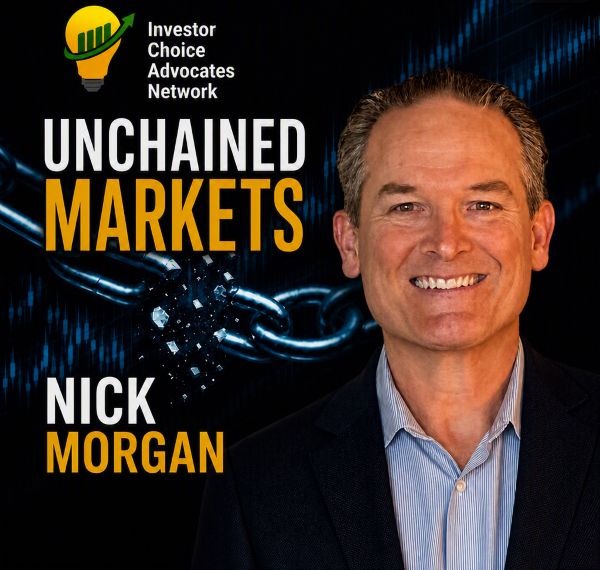
By Nick Morgan Founder and President, ICAN Law
Last week we wrote about clarity—what it is worth, and how rarely the markets are given any. This week, an example of what a lack of clarity costs American entrepreneurs.
A year ago, we wrote about a small Minnesota firm called Carebourn Capital and argued that the SEC’s retreat from its expanded “dealer” theory was not the victory the financial press was calling it. A regulatory retreat is not a legal ruling. We said the danger hadn’t gone away. It had just gone quiet.
That case is now over—for the SEC, anyway.
In March, the district court dismissed the agency’s suit. But the dismissal answered nothing. After nearly five years of litigation, a judgment of more than $12 million, and a federal appeal, no court has ever resolved the question the case was actually about: whether Carebourn broke the law in the first place. Carebourn is still trying to get that answer. It is back at the Eighth Circuit as we write this.
The SEC got to stop arguing. Carebourn didn’t stop fighting.
What Defines a “Dealer”
In securities law, dealers are firms that make a market—buying and selling securities for others and profiting off the spread. Think intermediaries, desks with clients, institutions that supply liquidity.
Traders invest for their own account. They are trying to grow a portfolio, not serve customers. The distinction carries real weight, because dealers face registration, reporting, and compliance obligations that traders do not.
Historically, the line was clear. You regularly bought and sold securities for customers from your own account; you were a dealer. You had no customers; you weren’t.
In recent years, the SEC blurred that line—a power grab that ensnared unsuspecting traders and threatened to trap far more if carried to its logical end.
The “Dealer Without Customers” Problem
Under former Chair Gary Gensler, the Commission advanced a theory: buy and sell securities often enough, even purely for yourself, and you might be a dealer—customers or not.
The theory was aimed at small funds and individual investors who financed microcap companies using convertible notes. The theory would include investors who weren’t committing fraud. The theory would capture investors who weren’t hiding anything. Even if they just bought notes, converted them to stock, and sold the stock.
That’s legal. That’s trading.
The SEC said: you were acting like a dealer, and you didn’t register.
What makes it worse is how the Commission chose to do it. Rather than going through rulemaking—where the public gets to challenge a claim of new authority before anyone is punished under it—the SEC used litigation and the threat of litigation to expand the definition case by case. It ambushed companies for breaking a rule that did not exist when they acted.
The formal rulemaking eventually came, and a federal court struck it down. The Commission withdrew its appeal in February 2025 and dropped some related enforcement matters. But by then the enforcement theory had already been road-tested in court, and one of the firms it was tested on was Carebourn.
The Carebourn case provides a stark example of the federal government pitting its virtually inexhaustible resources against defendants with limited resources and huge downside risks, all in an attempt to expand its jurisdiction and further regulate investor activity.
What Actually Happened to Carebourn
The SEC sued Carebourn Capital, its managing partner Chip Rice, and an affiliated entity named as relief defendant in September 2021, alleging they acted as unregistered dealers by buying convertible notes and selling the resulting shares into the market.
In September 2024, the district court entered judgment against them for more than $12 million in disgorgement and prejudgment interest. Carebourn appealed to the Eighth Circuit, where the case drew outside attention: the Managed Funds Association and other trade groups filed an amicus brief warning that the lower court’s reasoning would sweep in ordinary funds and professional investors who had never held themselves out as dealers.
Then, in June 2025, the SEC asked the Eighth Circuit to send the case back down to the district court, pointing to its own newly narrowed view of what a dealer is.
Read that sequence again: the agency spent three years winning on a theory, and then asked the appeals court not to review it.
Carebourn objected. Its position was not that it wanted a smaller number. Its position was that the Commission was trying to escape the liability question entirely.
“Carebourn’s life has been ruined by the Commission.”
That line came from Carebourn’s own filing, alongside a description of frozen accounts, reputational damage, and financial ruin. What the firm asked for was a ruling—confirmation or rejection, on the record, of whether the SEC ever had the authority it claimed.
The Eighth Circuit granted the SEC’s request and remanded in June 2025. On March 10, 2026, the district court dismissed the agency’s suit.
Carebourn asked to be made whole for what the litigation had cost it. The court said no. An everyday business person had their life shattered by a regulator trying to experiment with the law, and was able to walk away with no responsibility for the damage.
So the firm appealed again. That appeal was docketed at the Eighth Circuit in May 2026 and remains pending.
Five years, a $12 million judgment, two trips to the court of appeals, and the question at the center of the case is exactly as open as it was the day the complaint was filed. Nothing prevents a future SEC from taking this on again.
The Zombie Theory Lingers
Here is why that open question is not an academic problem.
The struck-down rule is gone. The dismissed cases are dismissed. But a handful of court decisions applying the expansive theory are still on the books, and two Eleventh Circuit rulings—Keener and Almagarby—still supply support for it. Unless other circuits reject them, or Congress narrows the statute, or the Supreme Court resolves the split, a future Commission can pick them up unchanged.
That is the trouble with unfinished business. Someone else can always finish it later, using every bit of the groundwork already laid, however flawed that groundwork was.
What this SEC treats as trash, a future SEC may treasure.
Not a Hypothetical
This was never really about one Minnesota firm.
It is about whether a government agency can change the rules without telling anyone, punish people retroactively for the change, and then walk away from the argument when the political weather shifts—leaving the target holding five years of legal bills and no ruling to show for it.
That is not a hypothetical risk. That is the record in SEC v. Carebourn Capital.
And it means the following is now true for anyone active in the markets:
- You can follow the law as it is written and understood today.
- You can be told years later that your activity should have triggered dealer registration.
- You can face a multimillion-dollar judgment for not complying with a rule that did not exist.
- You can spend years and a fortune defending yourself, watch the agency abandon the case, and still be told you are not entitled to a dollar of it back.
- And you may never get a court to say whether any of it was lawful.
No investor, large or small, can plan around a system that works this way. The uncertainty itself is the injury.
Regulatory Retreats Are Not Legal Victories
An agency that changes course can change course again. A different chair, a different Congress, a different crisis, and the theory comes back—with years of favorable rulings sitting there waiting to be cited.
The only durable protection is a judicial decision that says what the law is and binds the agency to it. That is why ICAN builds its work around litigation, and why cases like this one deserve attention long after the headlines move on.
Carebourn asked for clarity, and they still don’t have it.
Learn more about ICAN at https://www.icanlaw.org/
Author Bio: Nick Morgan is President of the Investor Choice Advocates Network (ICAN), a nonprofit public interest litigation organization advocating for economic liberty, capital formation, and entrepreneurship rights on behalf of small investors and entrepreneurs facing SEC and FINRA overreach.