
Uncategorized
Same Flight, Lower Bill, Better Kit
By DWN-team · Aug 17, 2026 Views: 114
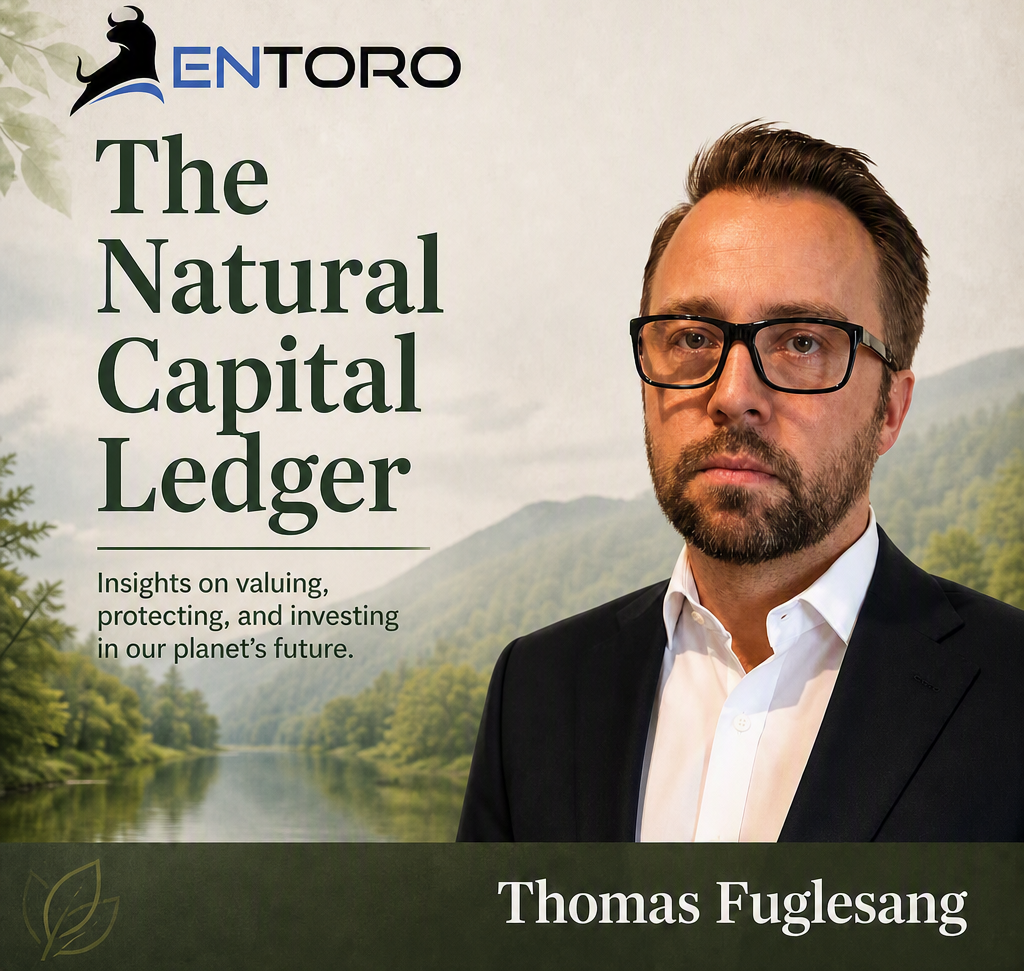
By Thomas Fugelsang, Managing Director, Entoro Capital, LLC
In an earlier piece in this series, we laid out the arithmetic problem sitting inside Scope 3: the same ton of carbon getting counted, and paid for, three or four times across a single value chain. That leaves an obvious next question. If the problem is structural, what does an actual fix look like? The clearest way to answer that is the same analogy that explains how companies got into this mess in the first place: the airline seat.
You used to fly economy
For most of the past decade, Scope 3 sat in a mostly voluntary, slightly performative space: big value-chain estimates, plenty of talk about high-integrity tons, and relatively soft consequences if the details were fuzzy. Companies bought the climate equivalent of economy-class tickets, $2 credits, minimal due diligence, reputational upside, limited regulatory scrutiny. That approach is no longer viable under current frameworks.When Scope 3 was voluntary, a company chose its seat freely. The $2 economy-class credit served its purpose: it signaled commitment, satisfied stakeholder expectations, and cost very little. If the underlying project failed to deliver, the consequences were mostly reputational. The plane was operating with low load factors, regulators, auditors, and investors were broadly not checking whether seats were actually occupied or whether the journey happened at all.
Now you're being forced into business class
The EU's Corporate Sustainability Reporting Directive (CSRD), the International Sustainability Standards Board's (ISSB) IFRS S2 climate disclosure standard, and California's Climate Corporate Data Accountability Act (SB 253), along with related regimes, have changed the rules. Once a company has made Scope 3 or net-zero commitments, it no longer really gets to choose whether to engage. It's expected to show credible action, backed by credits and interventions that can survive audit and regulatory scrutiny. Companies are no longer choosing whether to fly, or which cabin to sit in. In effect, regulators are pushing companies into business class: higher-integrity, higher-cost instruments built to withstand audit and regulatory scrutiny.The $20 heavily diligenced credit, with third-party verification, additionality assessments, legal due diligence on ownership and authorization, and alignment with Paris Article 6 or equivalent frameworks, is the new baseline. Choosing it over the $2 credit is rational: at the gate, auditors and regulators now have scanners. The $2 tickets that used to wave through are being rejected, not because of turbulence, but because they were never valid boarding passes in the first place.
At this point, a company hasn't yet changed the system it's flying in. It has just bought itself a more defensible seat in the cabin everyone has been told to occupy.
The cabin fills up, and the airline has sold your seat more than once
As disclosure rules tighten and investor expectations harden, more companies move from $2 economy-class credits to $20 business-class credits. The front of the plane fills up. Every responsible CFO, general counsel, and sustainability officer makes the same rational choice: upgrade to business class to reduce audit risk, regulatory exposure, and litigation tail risk.In accounting terms, though, the airline has quietly sold many of those seats more than once. The same ton of emissions is being pulled into several different Scope 3 inventories and several stacks of credits along the value chain, all in line with prevailing Greenhouse Gas Protocol (GHG Protocol) guidance, the industry rulebook for how companies calculate and report emissions.
Going at this alone, designing a Scope 3 approach in isolation, project by project, isn't wrong in a compliance sense, but it leads to overpaying: full business-class fares on seats that could have been shared or reallocated with the rest of the value chain. The climate impact of the underlying $20 projects doesn't change, but the effective cost per ton ends up far higher than it needed to be, because the buyer is paying for protection someone else in the chain has already paid for too.
Business as usual means paying for three or four seats you don't need
Under business as usual, a company keeps doing Scope 3 alone. It's now in business class, which is good, but it's effectively paying for three or four business-class seats because the same ton is being booked multiple times across its value chain.This isn't because the $20 credit is expensive. It's because the same seat is being bought three or four times over, and nobody in the organization, not the CFO, not the sustainability director, not the auditors, is aware of it. Each entity along the value chain is acting in good faith, following GHG Protocol and Partnership for Carbon Accounting Financials (PCAF) guidance, and individually doing the right thing. PCAF is the standard banks and investors use to measure the emissions financed through their loans and investments. The result, in aggregate, is that four entities have paid to address the same 200,000 tons of CO2-equivalent. The steel was made once. The emissions occurred once. But the bill arrived four times. This isn't a compliance violation. It's a structural cost leak, and it can be avoided if the chain coordinates.
Take a steel producer selling to an automaker, which sells to a fleet operator, which is financed by a bank. The steel producer reports the mill's Scope 1 emissions. The automaker reports those same emissions in its Scope 3 Category 1 (purchased goods). The fleet operator reports them in its own Scope 3 Category 1. The bank reports them in its Scope 3 Category 15 (financed emissions) under PCAF. Each entity, acting in good faith and following GHG Protocol and PCAF guidance, books the same 200,000 tons. Each may also buy credits or fund abatement projects to “cover” those emissions.
The steel was made once. The emissions occurred once. But four entities paid to address them. This is more expensive than it should be, not because any single actor did anything wrong, but because the system has no mechanism to coordinate claims, prevent duplication, or allocate costs efficiently across the value chain.
The fix: pay for your own seat once, get the rest for free
The collective model saves money that's currently being spent without anyone realizing it. A sector or value-chain Scope 3 architecture doesn't magically make a $20 credit cost $2. But it does stop the same ton being booked three or four times across a value chain. When firms agree in advance which emissions are genuinely Scope 3 for whom, and how costs will be shared, those same $20 business-class credits become dramatically cheaper per company, because each company pays its proportionate share of a joint bill rather than paying the whole bill independently, simultaneously, and redundantly with everyone else in the chain. The cabin stays full. The projects still cost what they cost. The climate impact is identical. What changes is that the bill stops being multiplied three or four times simply because every firm tried to solve Scope 3 alone.In practice, a sector or value-chain architecture functions much more like a value-added tax than like current Scope 3 accounting: emissions are measured once at the point of generation, recorded and priced incrementally along the chain, and then passed forward as a verified embedded carbon number, rather than being re-estimated at every corporate boundary.
The practical consequence is that every dollar spent starts to buy more actual decarbonization per unit of capital. Instead of four companies each paying for 200,000 tons linked to the same steel, one coordinated structure pays once at the source and allocates the cost fairly along the chain. The climate outcome is the same or better, but the effective cost per ton abated falls sharply, because duplicated spend and duplicated claims are removed from the system.
Three benefits business as usual can't match
The structural upside isn't only about the ticket price. It's also about how a company gets to the gate. In a firm-by-firm model, each company builds its own diligence machine, its own view of monitoring, reporting, and verification, its own legal tests, its own quality screens, often using similar external advisers and similar data, but with different heuristics and gaps. In a sector or value-chain architecture, the heavy lifting on monitoring, legal structure, and basic quality filters is done once and shared, instead of every company running its own bespoke process from scratch. For the same ticket price, the real value-add is fast-track and lounge access: the same or higher diligence quality, with less time in line and far less duplicated work.This is where Nobel laureate Daniel Kahneman's research matters. Early in his career, working on officer selection for the Israeli military, he showed that structured, trait-by-trait scoring systems dramatically outperformed intuitive, unstructured interviews, and that once a common structure was in place, individual judgment actually improved on top of it. A sector or value-chain Scope 3 architecture plays the same role for carbon and credit risk. When monitoring rules, legal filters, and basic quality thresholds are agreed once and shared across firms, diligence becomes a distributed, structured process rather than dozens of ad hoc exercises. That reduces noise, bias, and blind spots in how risks are assessed, and lowers the chance that one firm's internal heuristics turn into an expensive mistake while others made very different calls on similar underlying projects. Companies get the benefit of many independent teams looking at the same underlying structure, instead of everyone reinventing an incomplete wheel.
There's a second difference that only becomes apparent when the weather turns. A sector or value-chain architecture isn't just a nicer cabin, it's a different safety kit. Shared monitoring at the source, product-level allocation, and clear ownership and claim rules are the equivalent of putting a parachute under every seat, not just a yellow vest with a whistle. If legal, trade, or disclosure conditions change abruptly, a Carbon Border Adjustment Mechanism (CBAM) audit, a PCAF aggregation challenge, an ISSB assurance failure, or a regulatory crackdown on non-Paris-authorized credits, there's something real to rely on: a structure that aligns with Paris Article 6, CBAM's installation-level requirements, and PCAF's financed-emissions methodology. CBAM is the EU rule that charges importers for the carbon emitted in producing certain goods outside the EU. Business as usual provides a pile of marketing-driven claims and bespoke contracts that may or may not stand up when tested. The collective model provides a parachute: monitoring that regulators recognize, legal claims that sovereigns have authorized, and allocation logic that auditors can verify.
This addresses the unknown unknowns sitting inside current Scope 3 practice: the double counting, the non-aggregability, the lack of legal standing under Paris, the misalignment with CBAM and PCAF. Most firms managing Scope 3 alone haven't even framed these risks yet. A shared architecture makes them visible, and solvable.
Finally, there's the question of what happens if the plane goes down. A company that has traveled alone, with its own bespoke Scope 3 logic, its own credits, its own language, may find itself stranded with nothing but a whistle. A company that has traveled with its suppliers, its customers, and even its fiercest competitors on the same flight has safety in numbers: more bargaining power with the EU and other regulators when the next set of rules is written, more leverage across global value chains when negotiating cost allocation, data sharing, and abatement responsibilities, and a stronger claim to real impact and real commitment when CBAM, PCAF, or litigation enforcement arrives.
In that world, every dollar a company is obliged to spend either buys more real decarbonization per ton or, at the margin, strengthens its position when the rules tighten again, rather than discovering, at pushback, that it has just paid for a row of business-class seats that were already paid for by someone else.
Same flight, lower bill, better kit
Companies are going to spend real money on Scope 3 either way. The real choice is whether they keep buying duplicate seats in a crowded cabin because that's what everyone does, or coordinate the next flight instead. That means the plane is full and flying to the same destination, with the same climate impact and the same $20 credit quality. It means the bill isn't multiplied three or four times across the value chain. It means the diligence is stronger because the structure is shared. It means the protection under the seat is real rather than just a whistle. And it means safety in numbers once the rules tighten, because the value chain is moving together rather than as a set of isolated firms.Greater climate impact with less money spent, because shared infrastructure turns a structural cost leak into a coordinated investment.
Definitions
- CSRD: the EU's Corporate Sustainability Reporting Directive, which requires large companies operating in the EU to disclose detailed sustainability and climate data.
- ISSB: the International Sustainability Standards Board, the body that sets global sustainability disclosure standards, including IFRS S2, under the IFRS Foundation.
- SB 253: California's Climate Corporate Data Accountability Act (Senate Bill 253), which requires large companies doing business in California to publicly disclose their Scope 1, 2, and 3 emissions.
- CBAM: the EU's Carbon Border Adjustment Mechanism, which charges importers for the carbon emitted in producing certain goods outside the EU.
- PCAF: the Partnership for Carbon Accounting Financials, the standard banks and investors use to measure the emissions financed through their loans and investments.
- GHG Protocol: the Greenhouse Gas Protocol, the most widely used standard for how companies calculate and report their emissions, including Scope 3.
- CO2-equivalent (CO2e): a standard unit that converts the warming effect of different greenhouse gases into a single, comparable measure based on carbon dioxide.
Disclaimer: The views and opinions expressed in this article are those of the author and do not necessarily reflect the views of Entoro, LLC, or any of their respective affiliates. This article is provided for general informational and educational purposes only and does not constitute investment advice, a recommendation, an offer to sell, or a solicitation of an offer to buy any security, financial product, or investment strategy. The information presented is believed to be reliable but is not guaranteed as to its accuracy, completeness, or timeliness. Any forward-looking statements or opinions are subject to change without notice.
Author Bio: Thomas P. Fuglesang is a Managing Director at Entoro Capital, LLC and Capturiant, LLC, with over 25 years of experience in energy, shipping, commodities, and real estate. He specializes in corporate finance, investment banking, private wealth management, and equity sales, with deep expertise in structuring transactions and developing international capital market solutions. At Entoro and Capturiant, he leads structuring, capital markets advisory, and business development for environmental and alternative investment products.Previously, Thomas spent over 17 years as Managing Director at Absalon Capital Ltd, overseeing projects in oil services, shipping, and commodities, while holding multiple senior roles including Board Director and CFO. Earlier in his career, he held roles at Morgan Stanley (Private Wealth Management and Associate in Luxembourg), Credit Suisse (Investment Banking, Transportation/Shipping), and Pareto Securities (Equity Sales).
Thomas has extensive capital markets experience in capital raising, M&A, governance, advisory, and execution of large-scale international transactions. His leadership roles have included Board Director at CAPOL and Ascot Energy Services, CFO of Newport Shipping LLP, and Director at Ohlsson International Ltd and SeaHold Group.
He holds CFA Level I, the Investment Administration Qualification, and Capital Markets & Securities Analyst certification. His academic background includes an MSc in Shipping, Trade & Finance from Bayes Business School (London), and a BA in Business Economics from Vrije Universiteit Brussel (Belgium) and Augsburg University (Minneapolis).
Thomas is recognized for bridging traditional and emerging sectors and structuring innovative solutions for corporate and institutional clients globally.